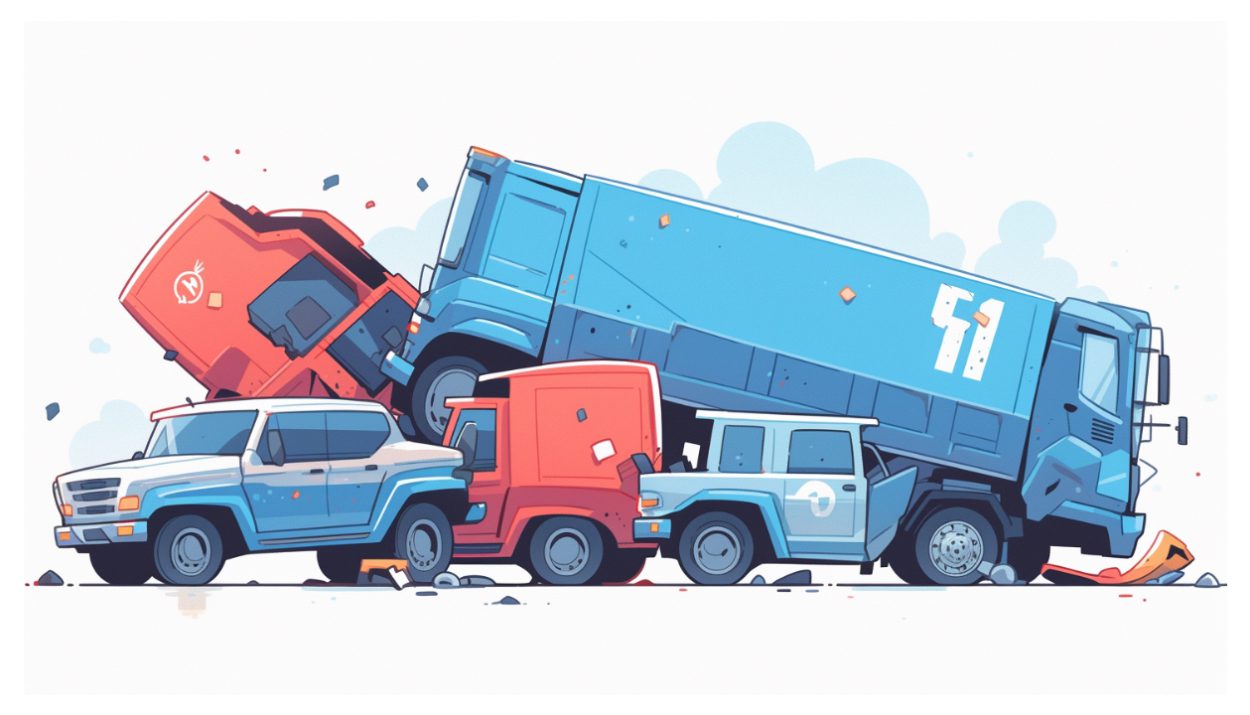
Key Takeaway: Truck accidents (18-wheeler accidents) involve more severe damage, multiple liable parties, and federal regulations. The compensation amounts are typically much higher than regular car accident claims.
When you are involved in an accident, the type of vehicle you collide with makes a big difference. A truck accident (also called an 18-wheeler accident or semi-truck accident) is very different from a regular car crash. Understanding these differences can help you protect your rights and get the compensation you deserve.
Why Are Truck Accidents Different?
Trucks are much larger and heavier than cars. A fully loaded truck can weigh up to 80,000 pounds, while a typical passenger car weighs only about 4,000 pounds. This size difference means truck accidents cause much more severe personal injuries and property damage.
Key Difference #1: Multiple Parties Can Be Liable
In a car accident, usually only the drivers are at fault. But in a truck accident, multiple parties may be responsible:
- The truck driver – if they were negligent (driving tired, distracted, or violating traffic laws)
- The trucking company – if they failed to maintain the truck properly or pushed drivers to work too long
- The truck manufacturer – if defective parts caused the accident
- The cargo loader – if overloaded or improperly loaded cargo caused the crash
Key Difference #2: Federal Regulations Apply
Commercial trucks must follow strict federal rules called the Hours of Service (HOS) regulations. These rules limit how long drivers can operate without rest. If a truck driver violates these rules, it can be evidence of negligence in your personal injury claim.
Key Difference #3: Higher Insurance Coverage
Trucking insurance policies typically have much higher limits than car insurance. While car insurance might cover $50,000 or $100,000, truck insurance can cover millions of dollars. This means you may be able to recover more compensation for your medical bills, lost wages, and pain and suffering.
Key Difference #4: More Complex Evidence
Truck accidents require investigating more types of evidence:
- Black box data (electronic logging device) – records speed, braking, and driver hours
- Driver logs – to check if HOS regulations were violated
- Maintenance records – to see if the truck was properly maintained
- Cargo manifests – to check if weight limits were exceeded
- Police reports – detailed documentation of the accident scene
Side-by-Side Comparison
| Factor | Truck Accident | Car Accident |
|---|---|---|
| Weight | Up to 80,000 lbs | About 4,000 lbs |
| Number of Liable Parties | Multiple (driver, company, manufacturer) | Usually one or two drivers |
| Federal Regulations | Yes (DOT, FMCSA rules) | No |
| Insurance Limits | $750,000 to $5+ million | $25,000 to $500,000 |
| Evidence Required | Black box, driver logs, maintenance records | Police report, photos |
| Average Settlement | $1 million to $5+ million | $15,000 to $100,000 |
| Legal Complexity | Very High | Moderate |
Do You Need a Truck Accident Lawyer?
Because truck accident claims are more complex, it is highly recommended to hire an experienced truck accident lawyer. A skilled attorney can:
- Investigate the accident thoroughly
- Identify all liable parties
- Gather critical evidence (black box data, driver logs)
- Negotiate with insurance companies
- Protect your rights in court if necessary
Why Act Fast? Truck accident cases have strict deadlines. Evidence can disappear quickly. Contact a lawyer as soon as possible to protect your case.
Frequently Asked Questions
Q: What should I do immediately after a truck accident?
Seek medical attention first, even if you feel fine. Document the scene with photos, exchange information with the truck driver, and contact the police. Then, consult with a truck accident attorney as soon as possible.
Q: How much is my truck accident case worth?
The value depends on factors like injury severity, medical expenses, lost wages, and pain and suffering. Truck accident settlements are typically much higher than car accident settlements due to the severity of injuries involved.
Q: Who pays for my medical bills after a truck accident?
The at-fault party’s insurance should cover your medical bills. This may include the truck driver’s insurance, the trucking company’s policy, or both.
Q: How long do I have to file a truck accident lawsuit?
The statute of limitations varies by state, typically 2-3 years from the accident date. However, evidence gathering should begin immediately, so contact a lawyer right away.
Conclusion
Truck accidents and car accidents may seem similar, but they have important legal differences. The complexity of 18-wheeler accident claims, multiple liable parties, federal regulations, and higher potential compensation mean you need experienced legal representation.
Understanding these differences is the first step to protecting your rights. If you have been involved in a truck accident, consult with a qualified personal injury lawyer who specializes in commercial vehicle accidents.
Disclaimer: This article is for informational purposes only and does not constitute legal advice. Please consult with a qualified attorney for your specific situation.